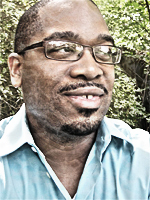
Type Illy continues our efforts to profile new, underground artists that need more shine. This time, we highlight Christian author Dorinda D.E. Nusum. I had the great pleasure of meeting her at my first Charlotte Literary Festival. She’s been a great supporter of TYPE ILLY and our collaborations have been quite fruitful. Please check our her website and support her latest work, The Back Pew Crew.
- How long have you been writing novels?
I have been officially writing novels since 2003. Prior to that time, I wrote plays. I wrote several for church groups, schools, and other community events. I also wrote poetry and short stories, but I never had them published. I wrote merely to entertain myself.
- How did you get into the field?
I have always enjoyed writing. From the time I learned to use a pencil, I collected all kinds of paper and wrote as much as I could. I have always enjoyed reading also. My favourite author as a child was Judy Blume. Her books were so engaging that I read them one behind the other and rarely took breaks in between. I never tired of books or of writing utensils. I was determined to pursue a career that would allow me write. I decided upon teaching and of course, English/Language Arts. During one of my English classes in college, I had a professor who said, “You’re not considered great because you read good books, you’re considered great when you write them.” That stuck with me and it was then that I decided to turn my hobbies into something more. I began writing for small community events and now I write hoping the nation will discover who I am and enjoy my works.
- What inspired or influenced you?
Great authors and great orators have always inspired me. I’ve always admired those who manage to create art using words.
- Who are your favorite writers?
I have several favourite authors. Among those are T.D. Jakes, Terry McMillan, Eric Jerome Dickey, ReShonda Tate Billingsly, and as of late, Pat-O-George Walker. While our writing styles and for some, our genres are different; I appreciate the way each of those authors skillfully makes use of language.
I am a Christian and writing Christian fiction is a good way for me to get a message across to others without coming across as preachy. Writing Christian fiction allows me to evangelize, testify, and to glorify!
- Are you comfortable with Christian fiction kind of being in its own section of the bookstore, away from White Christian fiction? Would you rather it be mixed in with everything else?
I don’t mind that African-American Christian fiction is set aside from other works of fiction. Everyone looks for something to read for which he or she can identify. It doesn’t matter where a book is positioned within a bookstore. If it’s meant to be read, it will be found.
- The church is often a touchstone to the larger issues in our community. Since your writing often deals with the church, do you feel compelled to bring ’serious’ issues from our community into your writing, or do you just write stories?
The types of stories I write are based on serious issues. Sins and Sacrifices and The Victory deal with adultery. Both books also touch on the fall of man, particularly fallen clergy. I felt it necessary to remind the community that we should strive to serve God, not man. I’ve heard so many complaints from people who have either left their churches or changed their religious views as a result of a fallen pastor. The notion is ridiculous since we should never place that much faith in flesh. The church serves as both a home for saints and a hospital for sinners, and the pastor’s membership does not give grounds to make him or her exempt. The service applies even more to them because they are leaders. They are at the front of the line. They are held highly accountable.
- What types of themes do you prefer to deal with in your writing?
My writing deals with man vs. man (criticism), man vs. himself (inner struggles), man vs. society, and man vs. the supernatural (God). Each of my characters deal with some type of conflict that is representative of conflicts placed upon society as a whole.
- There is a set of the literary world that looks down on ‘urban fiction’ and ‘urban Christian fiction’ as being too low brow and not high minded enough, or not the province of serious writers. What do you say to that criticism?
To the criticism that urban literature is not high-minded enough to be deemed of quality is a statement that those in the minority are still considered second class. Urban literature is designed to cater to the interests of the middle class, those who have struggled and who continue to struggle, whether financially, emotionally, spiritually, or otherwise. Urban literature uses language for which the average reader can understand and relate. Those of a more elitist standing fail in that only a select few can read and ingest the messages contained within their works. Urban literature is easy to understand, appreciate, and to is more in tune with real life experiences.
- Any plans to write under other themes?
I don’t have any immediate plans to write under other themes. I am still striving to perfect my current themes (She smiles).
- I have heard the complaint that black people don’t read or that we don’t read the ‘right stuff.’ What’s your response?
Blacks have always been readers and writers. They just haven’t been fully credited with either. The notion that blacks didn’t read the “right stuff” might be indicative of the fact that too much of the “wrong stuff” was being written. Urban Christian fiction is a genre that has grown rapidly over the years, which proves blacks have been hungry for good reads for quite some time.
- Talk about your newest novel, THE BACK PEW CREW? What’s it about? Who inspired the characters?
The synopsis for The Back Pew Crew reads, “The Back Pew Crew tells of Sandra, who believes she has been commissioned by God to investigate the members of her church in an effort to weed out the saints from the ain’ts and to purify the sanctuary. Under God’s command, Sandra solicits the aid of three others to assist in her divinely inspired quest. Together, the group forms The Back Pew Crew. Among those who will be investigated is the pastor’s wife! If the First Lady isn’t safe, who is? Look out! Here comes The Back Pew Crew and along with them is coming a heap of confusion.” The concept for the book grew from the idea of gossips in the church. I thought it was time to use a bit of humorous shame to quiet them a little.